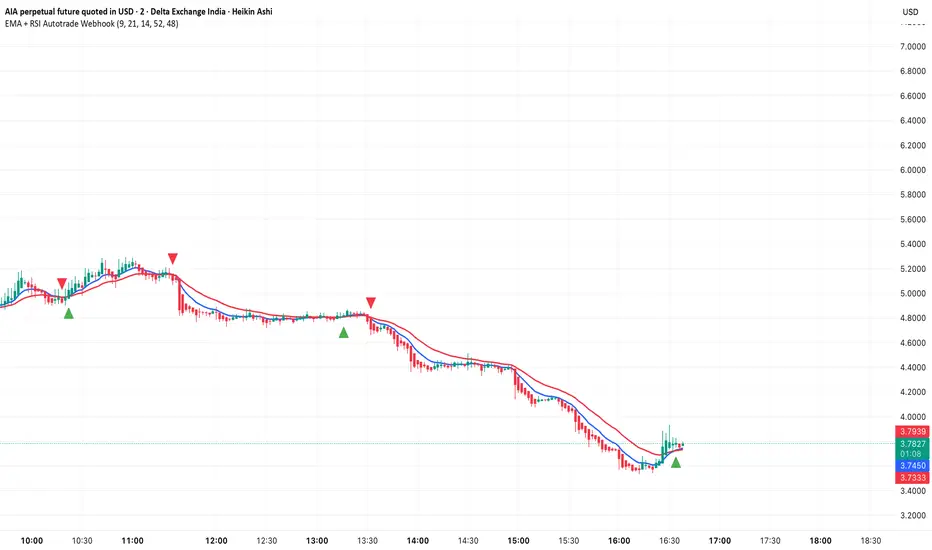
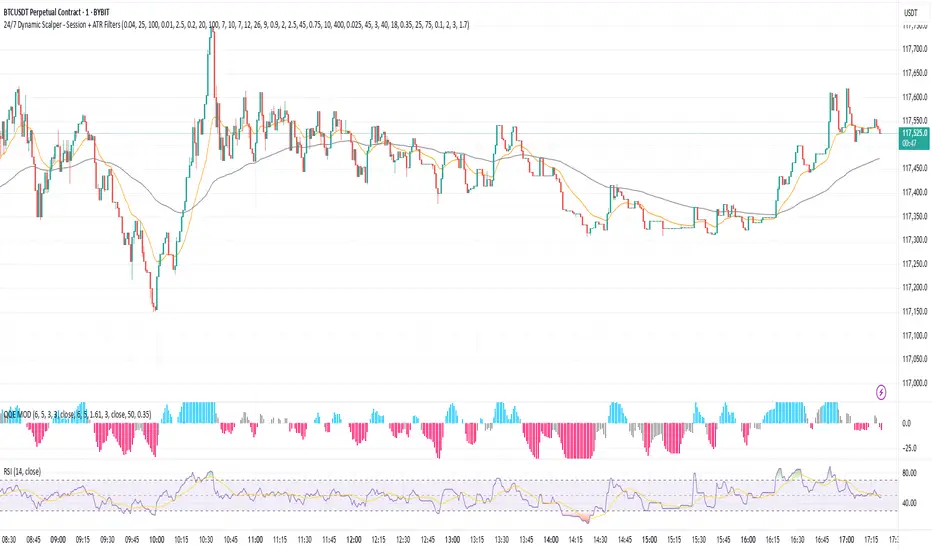
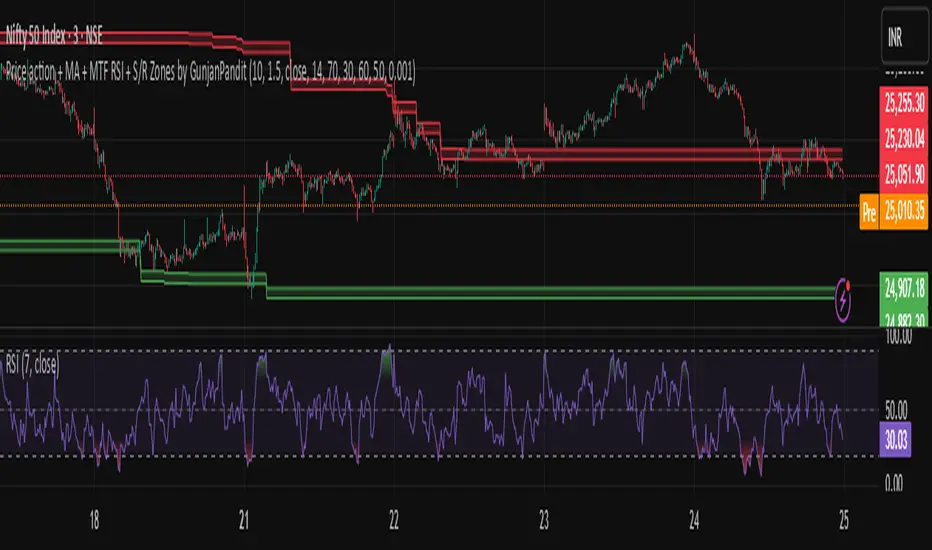
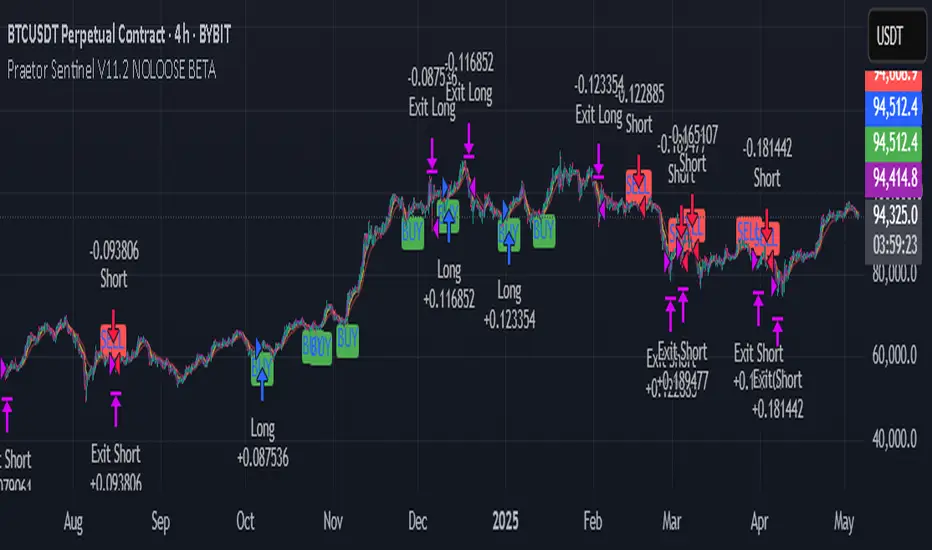
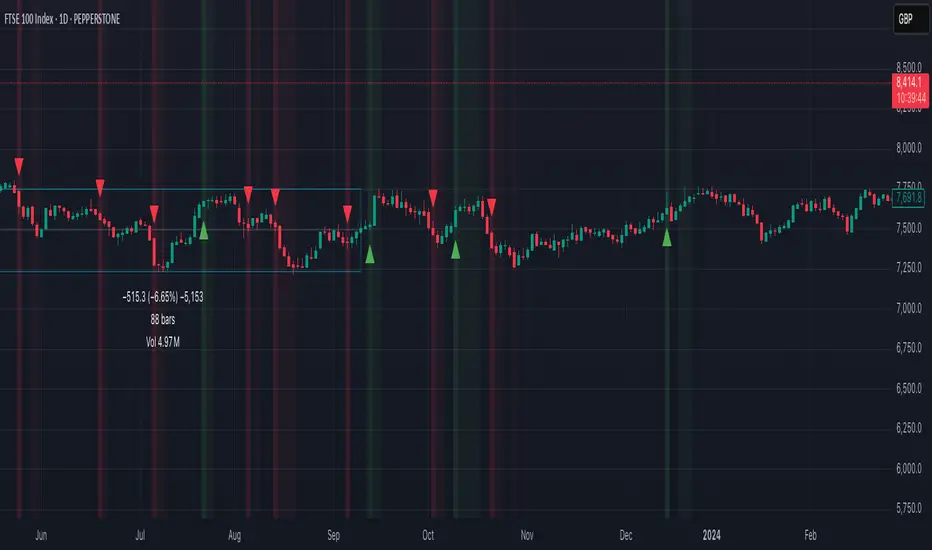
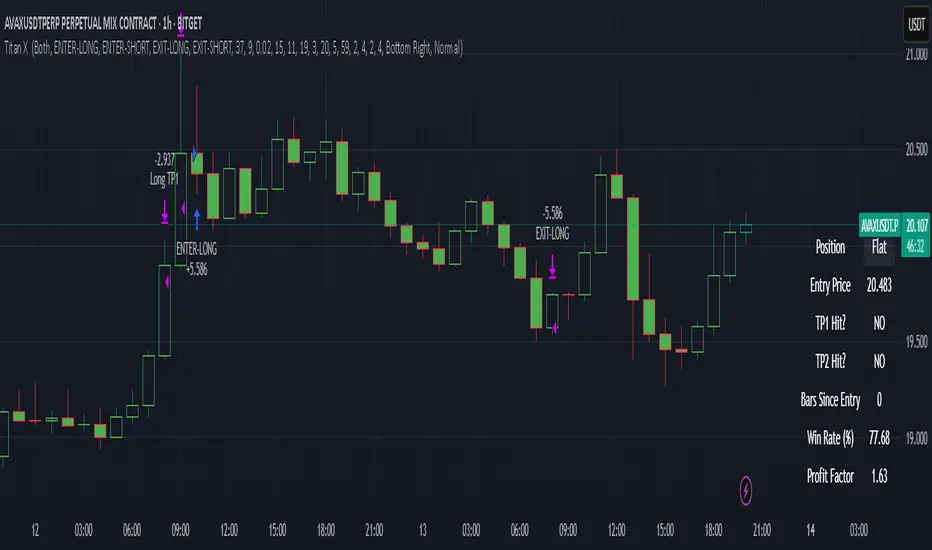
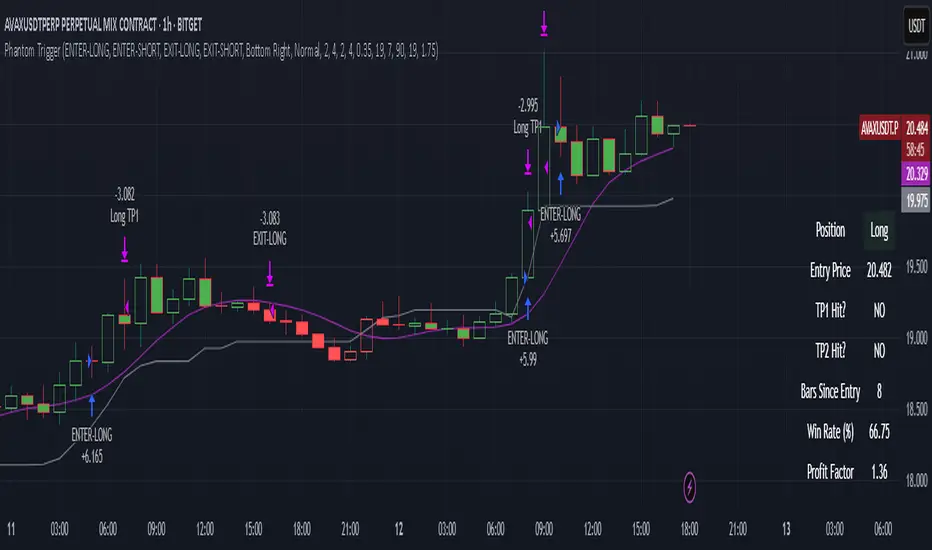
RSI Scalp Reversion (Buy/Sell Signal)RSI Scalp Reversion (Buy/Sell Signal) - with optional “trend filters”
Buy/Sell signals + optional alert-friendly events for automation via TradingView webhooks.
What it is
RSI Scalping Framework is a mean-reversion scalping framework built around RSI extremes “rubber band” moves. It is not a single magic preset; it’s a testing template that lets traders run the same core RSI idea while selectively adding confirmations to reduce random entries.
Core concept (signal engine)
Markets often stretch short-term and snap back. The script hunts those stretches using RSI:
- Long bias: RSI reaches a user-defined Oversold zone
- Short bias: RSI reaches a user-defined Overbought zone
Traders can choose whether the entry trigger is:
- In-zone (RSI is beyond the level)
- Cross-based (RSI crosses back from the extreme)
Why it’s different / originality
This script is published as a single modular framework rather than many minor variants. The intent is to let traders:
- Toggle filters on/off to see what actually improves results for a symbol/timeframe
- Keep risk logic consistent so comparisons are honest
- Use the same strategy shell while iterating settings
It includes a structured “reality-check” system (trend/momentum/volatility gates) and multiple exit modes so users can compare combinations without swapping scripts.
Filters (“quality knobs”)
Raw RSI can be noisy, especially during trends or low-volatility conditions. This framework lets you layer optional confirmations:
- RSI Smoothing Filter (default ON)
A smoothed RSI (e.g., RSI moving average) is used as a noise-reduction gate so trades prefer cleaner mean-reversion conditions rather than every touch of an extreme.
- ADX Filter (default ON)
A trend-strength gate used to avoid unfavorable regimes (e.g., very strong directional conditions for mean-reversion scalps). Threshold is configurable.
- ATR Volatility Filter (default ON)
A volatility gate to avoid “dead” conditions where scalps often fail due to insufficient movement. Threshold is configurable (ATR relative to price).
- EMA Trend Filter (optional)
Direction filter for users who prefer to align with a higher-level bias (e.g., only take longs above EMA / shorts below EMA).
- MACD Momentum Filter (optional)
Momentum confirmation for users who want RSI signals supported by directional momentum (MACD relationship configurable).
Exits / risk controls
Scalping needs strict, repeatable exits. The script provides:
- Fixed % Stop-Loss (per position)
- Fixed % Take-Profit (per position)
- Optional RSI-based “cool-off” exit (exit when RSI normalizes toward a user-defined level rather than relying only on price)
Buy/Sell signals
Signals & alerts
The script generates clear Buy (Long) and Sell (Short) signals based on the RSI mean-reversion engine (with any enabled filters applied). These signals can be used visually on-chart and as the basis for TradingView alerts.
Webhook automation
Automation / webhooks
This script is compatible with TradingView Alerts and can be used with webhook-based bots/bridges for automation (e.g., sending alert payloads to a third-party execution system). Users can configure alerts for:
- Buy/Long signal
- Sell/Short signal
- Optional exit events (fixed SL/TP behavior is handled by the strategy logic; RSI-based “cool-off” exits can also be alerted if enabled)
Note: Trade execution depends on your external bot/broker integration. Always forward test and validate alert payloads before using live.
How to use
1 - Add the script to your chart and confirm Buy/Sell signals match your intended RSI levels.
2 - Start with the core RSI engine + fixed SL/TP, then enable one filter at a time to evaluate improvements.
3 - Create TradingView alerts from the script’s Buy/Sell conditions.
4 - If you automate: connect alerts via webhook to your bot/bridge and forward test thoroughly (slippage, fees, and execution latency matter).
Best suited for
- Ranging / choppy markets
- Traders who want a structured way to test RSI mean-reversion with optional confirmations
- Traders who want one script that consolidates variations via toggles rather than multiple separate indicators
Notes
- This is an educational/research tool. Past performance does not predict future results.
- Settings are symbol/timeframe dependent.
Indicateur Pine Script®