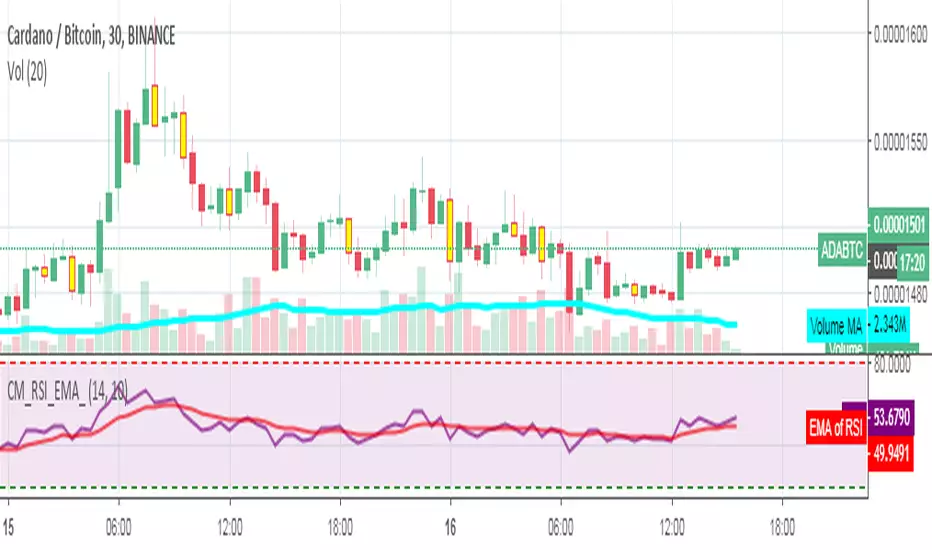
Stochastique Divergences IndicatorHello,
I made a custom indicator.
Divergences with stochastique and price are really strong signals.
About the indicator
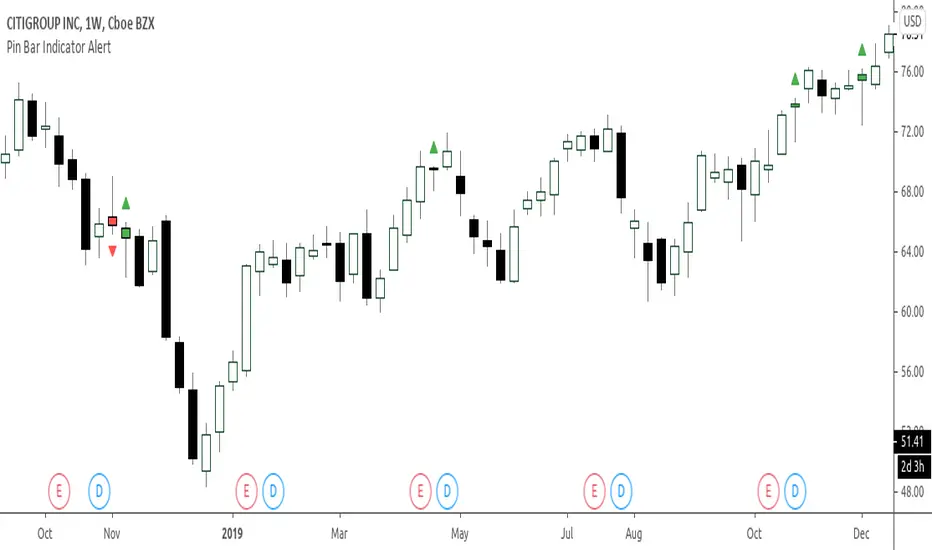
A bullish divergence happens when the stoch K makes a higher low and is depicted by a green triangle up.
A bearish divergence happens when the stoch K makes a lower high and is depicted by a red triangle down.
This script is the base for my next strategy that I should upload soon.
I will grant access (to this script and my others) to people willing to make a small donation.
Here is my BTC address : 19sVQvCDmVfEACq7BiMnWSMqFPZ8qfSQ2K
If you prefer ETH : 0xc8a5d3a63a05db0c2363ea1c08b37a01cce9ebfb
Send me a Private Message with the ID of the transaction
If you want to do some forward testing first, send me a message.
Also check blockchainfiesta.com
Recherche dans les scripts pour "bear"
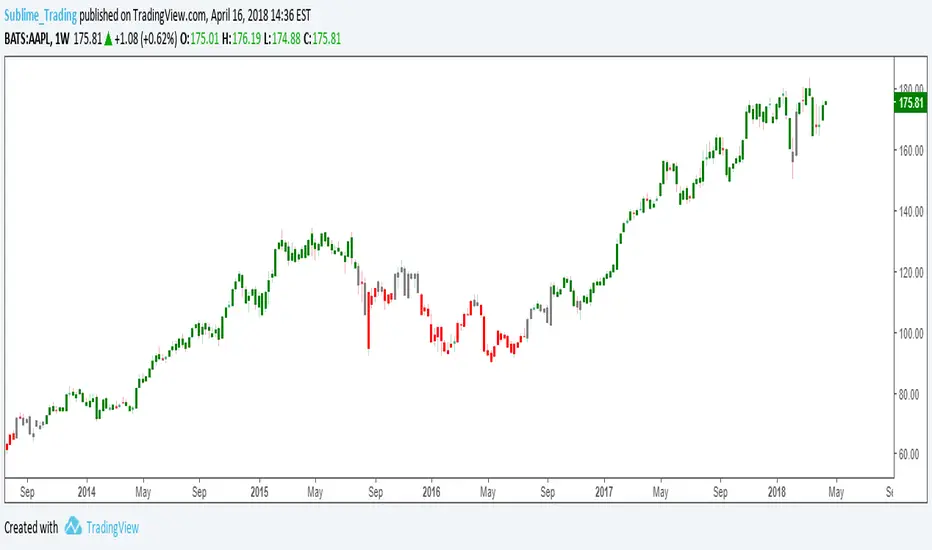
wTF50This is a customized trend filter that has several uses:
It helps identify trend direction, either bullish or bearish
It distinguishes between a pullback and a trend reversal
It helps identify areas where traders should stand aside
It highlights areas of consolidation
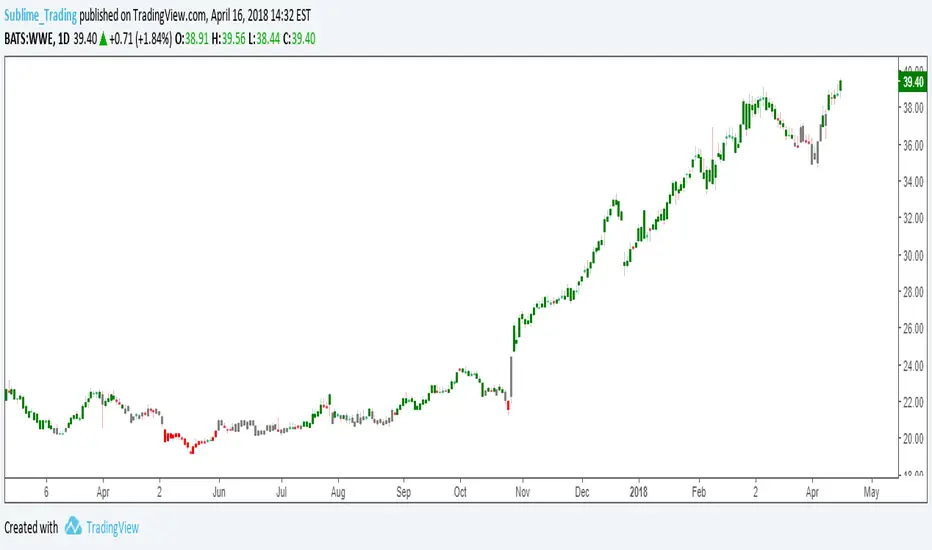
dTF50This is a customized trend filter that has several uses:
It helps identify trend direction, either bullish or bearish
It distinguishes between a pullback and a trend reversal
It helps identify areas where traders should stand aside
It highlights areas of consolidation
OBV divergence hidden and regular on both bearish and bullish.OBV (on balance volume) divergence indicator with hidden and regular signal on both bearish and bullish.
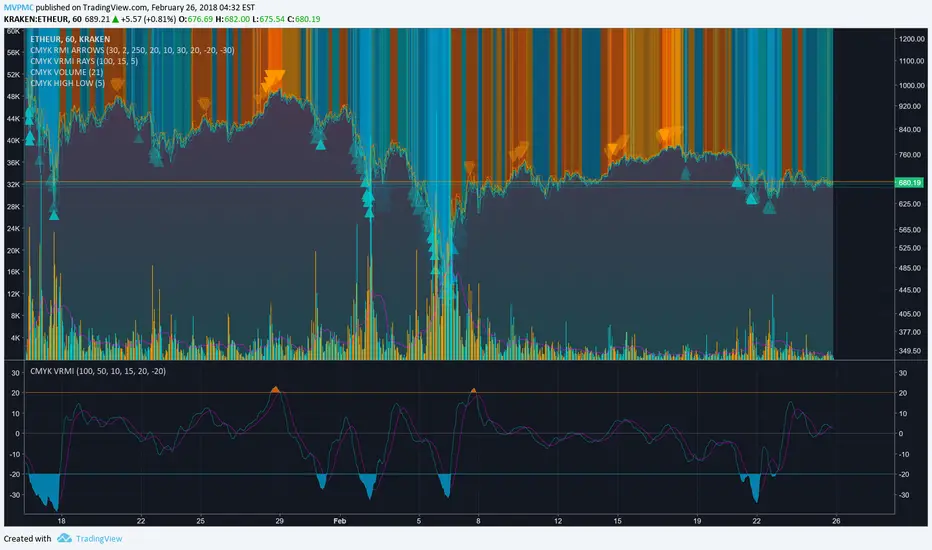
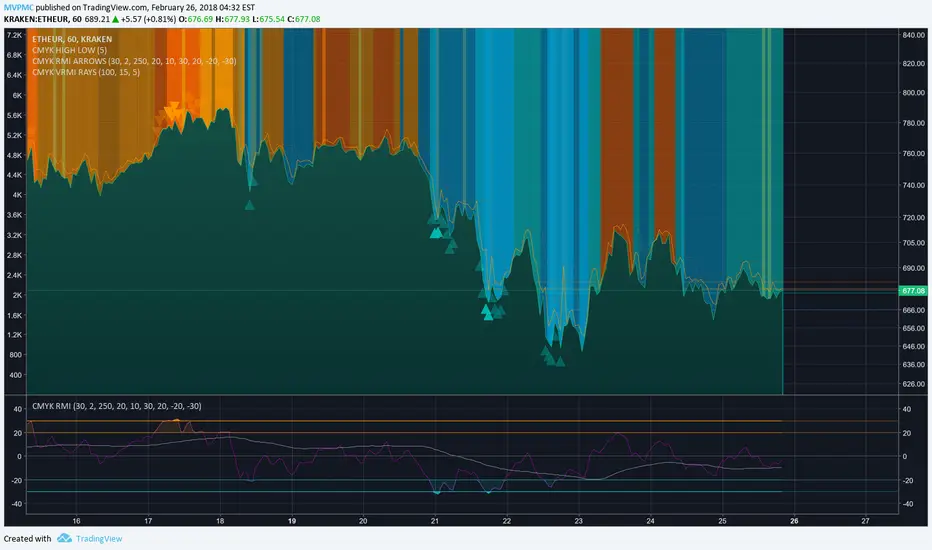
CMYK VRMI◊ Introduction
This script indicates the relative movement of price x volume.
◊ Origin
Based on 'The Relative Momentum Index' by Roger Altman : February, 1993 issue of Technical Analysis of Stocks & Commodities magazine.
While RSI counts up and down days from close to close, the Relative Momentum Index counts up and down days from the close relative to a close x number of days ago.
This results in an RSI that is smoother. The input has been changed to the change of a smoothed close multiplied by a smoothed volume.
The polarity of VRMI indicates bearish/bullish movement.
◊ Adjustments
CMYK color theme applied.
◊ Usage
VRMI indicates the force the market moves with.
◊ Future Prospects
-
◊ ◊ ◊ ◊ ◊ ◊ ◊ ◊ ◊ ◊ ◊ ◊ ◊ ◊ ◊ ◊ ◊ ◊ ◊ ◊ ◊ ◊ ◊ ◊ ◊ ◊ ◊ ◊ ◊ ◊ ◊ ◊ ◊ ◊ ◊ ◊ ◊ ◊ ◊ ◊ ◊ ◊ ◊ ◊ ◊ ◊ ◊ ◊ ◊ ◊ ◊ ◊ ◊ ◊ ◊ ◊ ◊ ◊ ◊ ◊ ◊ ◊ ◊ ◊ ◊ ◊ ◊ ◊ ◊ ◊ ◊ ◊ ◊ ◊ ◊ ◊ ◊ ◊ ◊ ◊ ◊ ◊ ◊ ◊ ◊ ◊ ◊ ◊ ◊ ◊ ◊ ◊ ◊ ◊ ◊ ◊ ◊ ◊ ◊ ◊ ◊ ◊ ◊ ◊ ◊ ◊
CMYK VRMI RAYS ◊ Introduction
Introducing VRMI in this script, an RMI based on price movement and volume, to indicate bullish and bearish trends.
This script marks the background depending on RMI <> VRMI , VRMI polarity and large buy/sell sprees.
◊ Origin
Based on 'The Relative Momentum Index' by Roger Altman : February, 1993 issue of Technical Analysis of Stocks & Commodities magazine.
While RSI counts up and down days from close to close, the Relative Momentum Index counts up and down days from the close relative to a close x number of days ago.
This results in an RSI that is smoother.
In addition VRMI reacts quick, it is used to cut off latency from RMI, and it's polarity indicates the beginning and end of a trend.
Large buy sell sprees and detected in their proportion with an sma on the volume
◊ Adjustments
CMYK color theme applied.
◊ Usage
This indicator can be used to detect trends and mark reversals.
◊ Prospects
◊ ◊ ◊ ◊ ◊ ◊ ◊ ◊ ◊ ◊ ◊ ◊ ◊ ◊ ◊ ◊ ◊ ◊ ◊ ◊ ◊ ◊ ◊ ◊ ◊ ◊ ◊ ◊ ◊ ◊ ◊ ◊ ◊ ◊ ◊ ◊ ◊ ◊ ◊ ◊ ◊ ◊ ◊ ◊ ◊ ◊ ◊ ◊ ◊ ◊ ◊ ◊ ◊ ◊ ◊ ◊ ◊ ◊ ◊ ◊ ◊ ◊ ◊ ◊ ◊ ◊ ◊ ◊ ◊ ◊ ◊ ◊ ◊ ◊ ◊ ◊ ◊ ◊ ◊ ◊ ◊ ◊ ◊ ◊ ◊ ◊ ◊ ◊ ◊ ◊ ◊ ◊ ◊ ◊ ◊ ◊ ◊ ◊ ◊ ◊ ◊ ◊ ◊ ◊ ◊ ◊
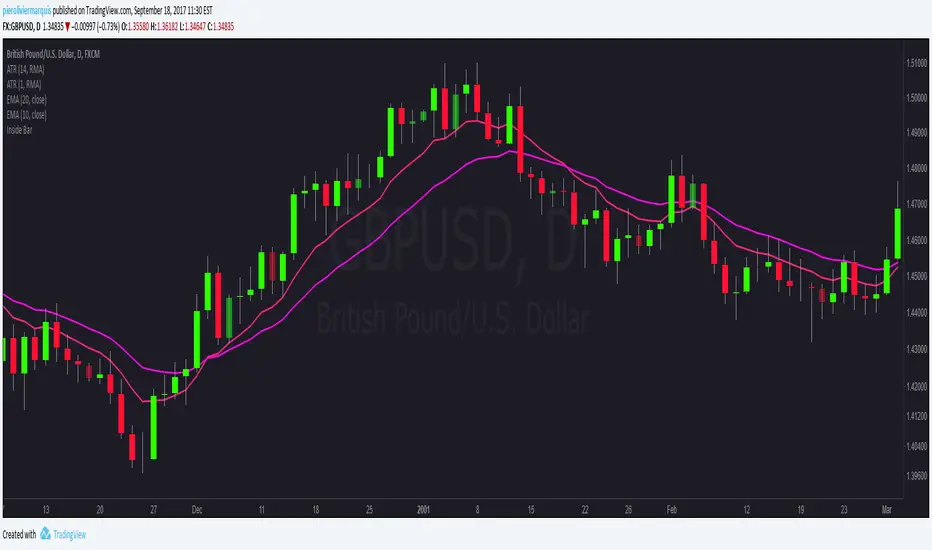
Bullish and Bearish Engulfing Patterns auto detectionThis simple indicator detects automatically most important bullish and bearish candlestick patterns formations. Used to locate potential supply and demand imbalances.
Copyright 2017 Alfonso Moreno www.set-and-forget.com
Super Envolvente (Bullish y Bearish)Identificador de Super-envolventes (SE), se encarga de darle un color verde a la SE alzista (Bullish) verde y rojo a la bajista (Bearish).
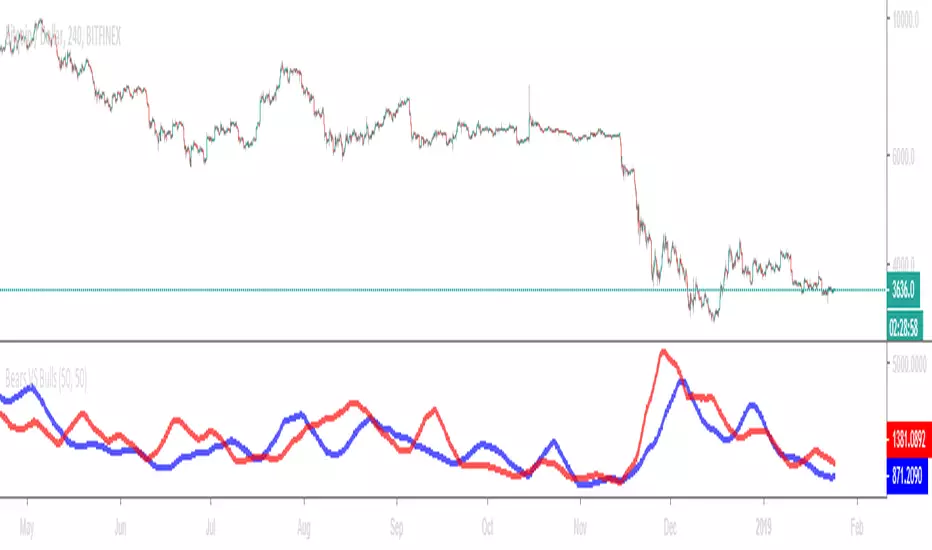
Bears VS BullsThis indicator will work on ANY instrument.
The red line is a moving average of ONLY sellers in the market.
The blue line is a moving average of ONLY buyers in the market.
The period or "length" of the individual moving averages can be adjusted in the indicator settings.
The default, it is set to 50.
Buying and selling trends often provide indications of market moves such as the most recent bottom in Cryptocurrencies.
Feel free to comment and share any indicator concepts or ideas for content you would like to see added to the Technical Indicator Bundle on www.kenzing.com
Bearish Trailing stopIt is a trailing SL. Works very well. Good good very good. Looks like my description needs more, so here is more random text.
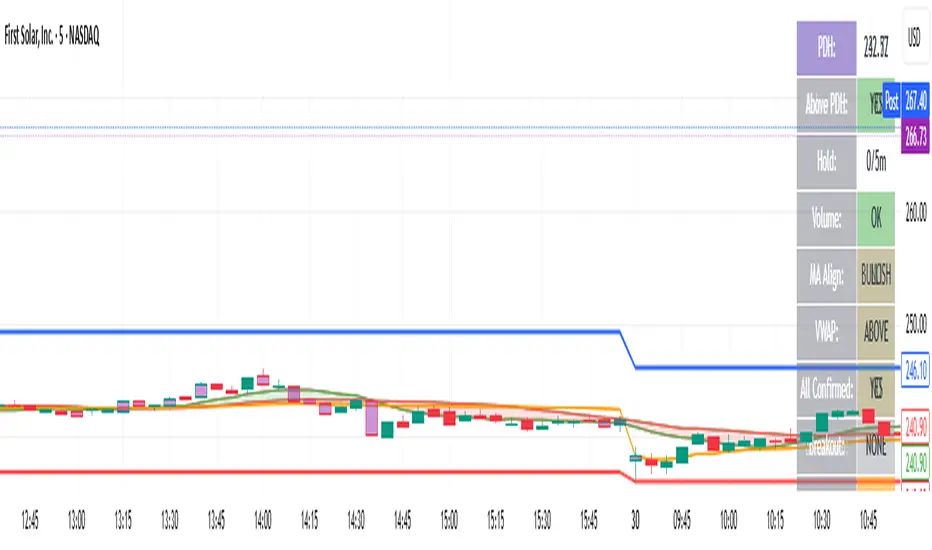
bearish Price Below PDL - Complete Multi-Confirmation Alert🎯 KEY IMPROVEMENTS:
1. Enhanced Alert Visibility:$jmoskyhigh
✅ HUGE triangle down marker with "SELL" text
✅ Alert title: "SELL SIGNAL - PDL BREAKDOWN CONFIRMED"
✅ Prominent info panel with red theme
✅ Clear "SELL ALERT: TRIGGERED" status
2. Better Visual Feedback:
Red frame around info panel
Larger shapes and markers
Color-coded confirmations (green = OK, red = FAIL)
Progress percentage displayed
Breakdown price label
3. Complete Alert System:
Main Alert: "SELL SIGNAL - PDL BREAKDOWN CONFIRMED"
Early Warning: "PDL Breakdown Started - Monitoring"
Reset Alert: "Confirmation Lost - Breakdown Reset"
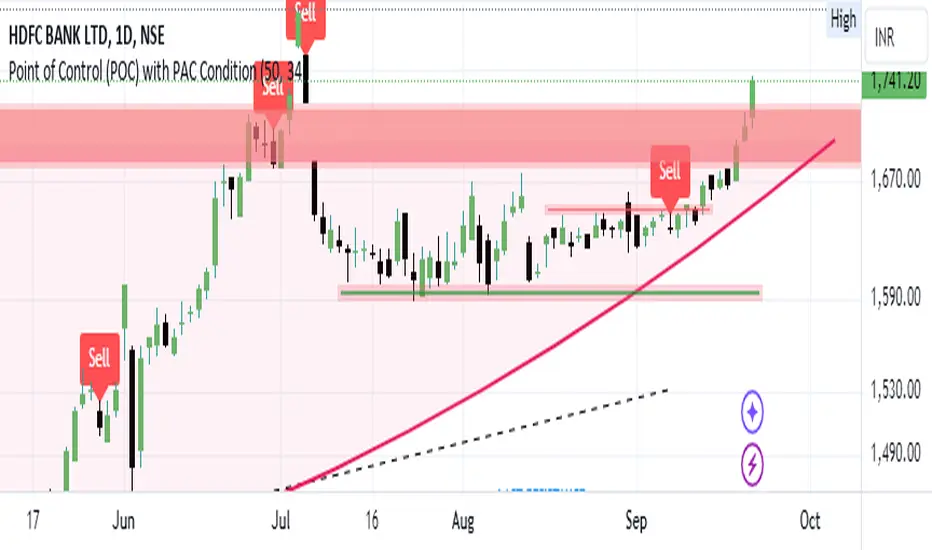
Bearish signal using Point of Control (POC) with PAC by guruThis indicator code helps traders identify potential sell opportunities using several important technical indicators:
Point of Control (POC) – This is the price level where the most volume was traded over the past several days.
Previous Day's Low – This shows the lowest price reached during the previous day.
PAC (Price Action Channel) EMA – These are two moving averages (one based on the low price and one based on the close price) that help determine if the price is trending within a certain range.
Volume SMA – This is a 3-day simple moving average (SMA) of volume, which helps filter out signals based on market activity.
What the Script Does:
Point of Control (POC):
The script looks at the last 50 days (configurable) and calculates which price level had the highest trading volume.
It then plots a red line on the chart at the POC level. This is important because it helps identify areas where there was strong market interest in the past.
Volume Moving Average:
The script calculates a 3-day SMA of volume, but it excludes the current day to avoid premature signals based on today’s trading.
The volume SMA is used to ensure there’s enough market activity (with a threshold set to 25 units) before triggering a sell signal.
Price Action Channel (PAC) EMA:
The PAC consists of two exponential moving averages (EMAs):
The PAC Low EMA: This is based on the low prices over the last 34 periods (configurable).
The PAC Close EMA: This is based on the closing prices over the last 34 periods.
These EMAs help determine if the price is trending above or below certain price levels.
Sell Signal Logic: The script checks three conditions before displaying a "Sell" signal:
Price Below POC and Previous Day’s Low:
The close price must be below both the Point of Control (POC) and the previous day's low.
Volume SMA Above 25:
The 3-day volume SMA must be greater than 25. This ensures the signal only triggers when there’s enough trading volume in the market.
Today’s Low is Above PAC EMAs:
Today's low price must be above both the PAC low EMA and the PAC close EMA. This prevents sell signals when prices are already significantly below the PAC, indicating possible exhaustion in the downtrend.
If all three conditions are met, the script will display a red "Sell" label on the chart, signaling a potential selling opportunity.
No Sell Signal if Price Reverses:
If the price crosses back above the POC or the previous day's low, the script will remove the sell signal and reset for a new opportunity.
Summary of Conditions:
For the script to display a "Sell" label:
The close price must be below the Point of Control (POC) and the previous day’s low.
The 3-day volume SMA (excluding today) must be greater than 25 units.
The low price of the current day must be above both the PAC low EMA and the PAC close EMA.
If these conditions are met, a red sell label appears on the chart as a potential signal for a short (sell) trade.
Bearish FS Continuation S1BB - baby bar / inside bar
DF - downflow, meaning 20MA below 50MA
EXE - execution bar, indicator to short
Mainly to identify execution bar for shorting using inside bar identification and force top
Guneet-ScalperBearish trend candle color change to red with sell print
Bullish trend candle color change to green with buy print
thanks
jas toor
[CT] MTF CISD w/ExtensionsThis indicator is a modified version of “Change in State of Delivery CISD” originally created by © AlgoAlpha and released under the Mozilla Public License 2.0. The core CISD logic, including how the script identifies qualifying bullish and bearish state changes and how it draws the original CISD levels, comes from AlgoAlpha’s work. The version you are using has been modified by © ChaosTrader63 to add multi time frame CISD functionality, optional HTF labeling and styling controls, and a configurable method to extend a user selected number of the most recent current time frame CISD levels beyond the last candle.
At its core, CISD is designed to identify moments when price behavior suggests a meaningful shift in control, where one side of the market has effectively “taken delivery” and the prior state has changed. The script watches price swings, then tracks specific candle state transitions that can act like triggers. When the conditions are met, it prints a CISD level as a horizontal line originating from the candle that defined the trigger and extending to the detection candle, creating a clear reference level that can behave like a decision point for future price interaction. In practice, those levels often act as areas where price may react, reject, or accept, because they represent the point where a meaningful state change was confirmed by price behavior rather than by a simple moving average or lagging trend filter.
The indicator also includes swing based liquidity tracking to provide context around potential liquidity events. It detects swing highs and swing lows using a pivot period you control, then maintains those swing levels as “liquidity lines” until they are either mitigated or expire after a set number of bars. When price wicks into one of those swing liquidity levels and confirms the mitigation, the script records that event. If a CISD trigger happens shortly after, and the new state change occurs with evidence that opposing liquidity was just taken, the script flags that as a stronger event by marking it on the chart. This is meant to separate normal CISD signals from those that occur after a sweep, because a sweep plus a decisive state change is often more meaningful than a state change that happens in the middle of noise.
The user controls in the calculations section determine how sensitive or selective the CISD detection is. The noise filter controls how strict the script is about qualifying the internal structure that leads to a CISD event. Higher values reduce noise and typically produce fewer, more selective CISD levels, while lower values will produce more frequent levels that may be less reliable in choppy conditions. The swing period controls how far back the script looks when identifying pivot highs and lows, which changes how “major” a swing must be to count as liquidity. The expiry bars setting controls how long older liquidity levels remain active before they stop updating or are removed, and the liquidity lookback determines how recently a swing mitigation must have occurred for the script to treat the CISD as happening with a sweep.
Visually, the script colors candles based on the current CISD trend state. When a bearish CISD is detected, the trend state flips bearish and candles are shaded using the bearish color with a user controlled transparency blend, and when a bullish CISD is detected the trend state flips bullish and candles are shaded using the bullish color. This makes the tool useful not only for marking levels, but also for keeping a simple “state” view on the chart so you can see when the indicator believes control has shifted. If you enable the option to use HTF trend for candle coloring, then the candle shading can reflect the higher time frame trend state instead of the local chart state, which is helpful when you want to trade a lower time frame while staying aligned with the higher time frame CISD bias.
The modifications add a higher time frame CISD layer so you can see more significant CISD levels from a chosen HTF while trading on a lower time frame chart. When enabled, the script computes CISD on the higher time frame through a request security call and then draws HTF CISD lines onto your current chart. You can require confirmed HTF signals only, which means the HTF CISD will print only after the HTF candle closes, reducing repaint style behavior and preventing the level from appearing and disappearing mid-candle. The HTF CISD lines keep the original bullish and bearish color scheme, and you can choose whether they render as solid or dashed to visually separate HTF structure from current time frame structure. The script can also place a label on the HTF CISD level, showing the selected HTF, for example “15 min HTF CISD,” and you can control the label background color, text color, size, and a horizontal offset so the label sits to the right of the current price rather than directly on top of the level.
The other key modification is the extension system for the current time frame CISD levels. The original script draws CISD levels from the origin candle to the detection candle, which is the “normal” behavior and is still preserved for all CISD levels. The enhancement allows you to choose how many of the most recent current time frame CISD levels you want to extend past the last candle by a defined number of bars. This is designed for traders who want their freshest decision levels projected into the future so they can be used as immediate references for reaction, acceptance, rejection, entries, or targets, without cluttering the chart by extending every single historical level. Because the extension uses the original line and simply moves the line’s end point to bar index plus your offset, it extends cleanly from the true starting point with no visual gap, and it automatically updates as new bars print. When a level is no longer within the most recent group, the script restores the original endpoint so older CISD lines revert back to normal and do not continue extending.
To use the indicator effectively, start by choosing whether you want it to be a current time frame decision tool, a higher time frame structure tool, or both. If you are trading lower time frames, enabling HTF CISD with confirmed only is usually the cleanest way to stay aligned with the dominant structure while avoiding levels that shift during an unclosed HTF candle. Then tune the swing period and noise filter to your market. If you are seeing too many levels in chop, increase the noise filter and consider a longer swing period so only larger structural transitions qualify. If you are missing important shifts, reduce the noise filter slightly so the script becomes more responsive. For execution, treat CISD levels like state change reference prices. When price returns to a bullish CISD level, look for acceptance above it to confirm continuation or rejection below it to warn of failure, and do the inverse for bearish levels. The liquidity sweep markers are especially useful as a context filter, because a CISD that occurs after a sweep often represents a more forceful transition where one side grabbed liquidity and then reversed state, which can create cleaner follow-through or stronger reaction zones.
Overall, this modified version keeps AlgoAlpha’s original CISD and liquidity framework intact, but adds the two things traders typically need when using a state change concept in live execution: the ability to overlay higher time frame CISD structure on a lower time frame chart, and the ability to project only the most relevant recent CISD levels into future bars so the levels are immediately actionable without turning the chart into a wall of extended lines.
Rhokeo-VW-RSI Histogram for Cumulative Delta by ZeiirmanRhokeo-VW-RSI Histogram: Volume-Weighted Momentum (use with Cumulative Delta from Zeiierman) Note that Cumulative Delta is a paid indicator.
Overview: The Rhokeo-VW-RSI Histogram is a momentum oscillator designed to filter out market noise by integrating volume directly into the RSI calculation. Unlike a standard RSI, which only considers price change, this indicator weights those changes by the volume occurring at the time.
It creates a momentum profile in the form of a Histogram. If the price moves on high volume, the indicator reflects that strong market interest through its volume-weighted gain and loss calculations. It is particularly effective as a complementary filter for “Cumulative Delta” from Zeiierman to confirm the strength behind a move before you enter a trade.
How It Works The indicator operates on a normalized scale of -1.0 to +1.0 for easier visual interpretation and compatibility with Cumulative Delta indicator:
• The Volume-Weighted Core: Gains and losses are calculated by multiplying the price change by volume to ensure the "Relative Strength" reflects true capital flow.
• Smoothing for Clarity: The raw Volume Weighted RSI (VW-RSI) is processed through a customizable Moving Average—such as SMA, EMA, SMMA, WMA, or VWMA—to produce the smooth histogram.
• Four-Zone Coloring System: The histogram changes color dynamically based on momentum intensity:
o Strong Bull: Price is trending up with high-volume conviction.
o Weak Bull: Positive momentum, but not yet overextended.
o Weak Bear: Negative momentum starting to build.
o Strong Bear: Heavy selling pressure with high-volume conviction.
Key Features
• Shading: The background features optional red and green shading in the "Extreme" zones to warn traders of potential exhaustion areas.
• Dynamic Zero Line: The center line flips color between Green and Red based on whether the VW-RSI is positive or negative.
• Customization: Traders can adjust the smoothing length, source price, and the specific levels for overbought/oversold zones.
Best Use Case for New Traders: New traders often get "faked out" by price spikes that have no volume behind them. This indicator helps confirm and time better entries:
1. Wait for your Cumulative Delta indicator to give a signal.
2. Check the VW-RSI Histogram and whether it confirms or not.
3. Long Entry: Only enter if the histogram is positive and rising (above 0).
4. Short Entry: Only enter if the histogram is negative and decreasing (below 0).
________________________________________
Disclaimer
Financial Risk:
• Trading involves significant risk, and most traders lose money.
• This indicator is a tool for technical analysis and does not constitute financial, investment, or trading advice.
• Past performance is not indicative of future results; never trade with money you cannot afford to lose.
Usage & Reliability:
• The Rhokeo-VW-RSI Histogram is provided "as-is" for educational and informational purposes only.
• While volume-weighting aims to filter market noise, no indicator can guarantee 100% accuracy or predict future market movements with certainty.
• This script is intended to be a complementary tool that works well with other indicators in this case the Cumulative Delta from Zeiirman; it should be used in conjunction with other forms of analysis, risk management, and your own due diligence.
Commercial Notice:
• If you are using this alongside a third-party paid indicator, please note that I am not responsible for the performance or support of external products.
• Users are responsible for their own trade execution and account management.
25GN_TrendSqueezeProThe 25GN_TrendSqueezePro is a comprehensive trend-following and momentum-reversal tool. It combines three distinct trading methodologies into one confluence engine:
1. Trend Tracking: A custom CCI/ATR-based trend line.
2. Momentum Squeeze: A Bollinger Band/Keltner Channel volatility detector.
3. MACD Divergence: A price-momentum discrepancy engine powered by the Fontilab library.
Adaptive Lookback
Automatically adjusts the "Pivot Lookback" based on the timeframe: Weekly: 2-bar right / 5-bar left, Daily: 3-bar right / 8-bar left, Intraday: 5-bar right / 10-bar left.
Speed Logic (Adaptive Timeframe) / Smart Divergence: The pivot lookbacks automatically adjust based on whether the user is on a Daily or Weekly chart.
Enable Faster Signals: Uses a tfRatio (default 0.66) to calculate signals from a lower timeframe than the chart you are currently viewing. This allows for earlier entries on 1D or Weekly trends.
Alert System (The "Umbrella" Logic)
The script features a hierarchical alert system managed by the "Enable Umbrella Alert Mode" toggle.
Mode 1: Individual Alerts (Toggle OFF)
When the Umbrella mode is disabled, you can set specific alerts for every individual event:
Buy Signal / Sell Signal
Trend Flipped Bullish/Bearish
Bullish/Bearish Divergence
Mode 2: Umbrella Alerts (Toggle ON)
When enabled, the individual alerts above are silenced. Instead, the script only fires the "Bias" alerts:
BULL Bias (Umbrella): Fires if any of the following occur: Buy Signal, Trend Flip Green, OR Bullish Divergence.
BEAR Bias (Umbrella): Fires if any of the following occur: Sell Signal, Trend Flip Pink, OR Bearish Divergence.
Intraday Expansion Icons (< 30m)
On lower timeframes, the Trend Line plots specific status dots:
Neon Orange Circle: Pre-Expansion (Squeeze ratio is coiling at 0.9).
Neon Green/Red Square: Expansion Flash (Squeeze has just broken into volatility).
Neon Red/Pink Circle: Squeeze Start (Market has entered a new consolidation phase).
Execution Guide
Identify Trend: Ensure the Trend Line matches your bias (Green for longs).
Wait for Squeeze: Look for the momentum histogram to cross the zero line.
Confirm with Divergence: A triangle appearing during a squeeze increases the probability of a successful breakout.
Potential Entry: Triggered on the Blue "B" or Black/Red "S" labe.
Warning: Trading involves significant risk. This indicator is a tool for technical analysis and should not be used as the sole basis for financial decisions. // This script is provided for educational and entertainment purposes ONLY. The author is not responsible for any trades, losses, or financial decisions in any form resulting from the use of this indicator. Trading involves significant risk; always perform your own due diligence. Use at your own risk.
NY OPEN REVERSAL SCANNERNY OPEN REVERSAL SCANNER
Es un sistema de trading institucional diseñado para capturar giros de mercado de alta probabilidad justo después de la apertura de Nueva York (9:30 AM EST). Este indicador no sigue tendencias ciegas; su objetivo es detectar cuándo el mercado ha "atrapado" a los traders minoristas fuera del rango inicial para operar el regreso triunfal al valor real.
🔹 ¿Por qué es diferente?
La mayoría de los traders pierden dinero operando rupturas (breakouts) que fallan. NY OPEN REVERSAL SCANNER voltea la tortilla: utiliza un escáner de volatilidad avanzada para identificar el agotamiento y las señales de reversión en los extremos del rango de apertura.
🔹 Lógica de Alta Precisión
Filtro de Volatilidad Real (ATR %): El sistema ignora los días de bajo volumen. Solo activa señales en activos que han movido un porcentaje significativo de su ATR diario en los primeros 15 minutos, garantizando que haya suficiente liquidez para una reversión potente.
Screener Multiactivo 8-en-1: Monitorea simultáneamente Oro, Índices y Forex. El panel te dirá exactamente qué activo está "LISTO" (en zona de trampa) y cuál está en espera.
Confirmación de Acción del Precio (Price Action): El script busca patrones específicos de capitulación fuera de los límites de Nueva York:
Hammer & Inverted Hammer: Identifica patrones de agotamiento.
Bullish/Bearish Engulfing: Detecta el momento exacto en que el flujo de órdenes cambia de dirección fuera del rango.
Filtro de Volumen Inteligente: Solo se marcan las rupturas que muestran un volumen inusual, lo que suele preceder a los movimientos de "limpieza" o barrido de stops.
🔹 Ventajas Exclusivas
✅ Cero Repintado: Las alertas y etiquetas se confirman solo al cierre de la vela, dándote entradas sólidas y verificables.
✅ Niveles Magnéticos: Visualiza el High y Low de la apertura como zonas institucionales que el precio suele testear repetidamente.
✅ Alertas "Push" Optimizadas: Recibe notificaciones directamente en tu móvil o escritorio cuando se confirma una trampa de liquidez con un patrón de vela.
🔹 Guía Rápida de Operación
Paso 1: Espera a que el Screener marque un activo como "LISTO" (Volatilidad confirmada).
Paso 2: Observa si el precio sale del rango sombreado.
Paso 3: Si aparece una etiqueta de Hammer o Engulfing fuera del rango, busca la entrada en sentido contrario (hacia el interior del rango).
---------------------------------------------------------------------------------------------------------------------
NY OPEN REVERSAL SCANNER
NY OPEN REVERSAL SCANNER is an institutional-grade trading system engineered to capture high-probability market reversals immediately following the New York Open (9:30 AM EST). This indicator doesn't just blindly follow trends; its core objective is to detect when the market has "trapped" retail traders outside the initial range, allowing you to trade the reversal back to fair value.
🔹 What makes it different?
Most traders lose money by trading breakouts that fail. NY OPEN REVERSAL SCANNER flips the script: it utilizes an advanced volatility scanner to identify exhaustion and reversal signals at the extreme edges of the opening range.
Shutterstock
🔹 High-Precision Logic
True Volatility Filter (ATR %): The system ignores low-volume days. It only activates signals for assets that have moved a significant percentage of their Daily ATR within the first 15 minutes, ensuring there is enough momentum for a powerful reversal.
8-in-1 Multi-Asset Screener: Monitor Gold, Indices, and Forex simultaneously. The real-time dashboard tells you exactly which asset is "READY" (in the trap zone) and which is on standby.
Price Action Confirmation: The script scans for specific capitulation patterns outside the New York boundaries:
Hammer & Inverted Hammer: Identifies key exhaustion points.
Bullish/Bearish Engulfing: Detects the exact moment order flow shifts direction outside the range.
Smart Volume Filter: Breakouts are only flagged when they show unusual volume spikes, which typically precede "liquidity grabs" or stop-run maneuvers.
🔹 Exclusive Features
✅ Zero Repainting: All alerts and labels are confirmed only at the close of the candle, providing solid, verifiable entry points.
✅ Magnetic Levels: Automatically plots the Opening High and Low as institutional zones that price frequently retests throughout the session.
✅ Optimized Push Alerts: Get notified on your mobile or desktop the moment a liquidity trap is confirmed by a candlestick pattern.
🔹 Quick Start Guide
Step 1: Wait for the Screener to mark an asset as "READY" (Volatility confirmed).
Step 2: Observe if the price moves outside the shaded opening range.
Step 3: If a Hammer or Engulfing label appears outside the range, look for an entry in the opposite direction (targeting the interior of the range).
SLC: Hybrid Strategy v1 This indicator is the ultimate "Map" and "Compass" for the market, fusing Trend Following (Pro-Trend) with Smart Money Concepts (SMC / Counter-Trend). It visualizes the Liquidity Pools (Stop-Loss Clusters) targeted by institutional algorithms and the Traps (Fake-outs) that occur there, highlighting high-probability entry zones.
🚀 3 Key Features
1. Trend & Context (The Map)
Instantly identify the current market bias simply by looking at the background color and cloud.
Green: Up Trend (Bullish / Long Bias)
Red: Down Trend (Bearish / Short Bias)
Gray: Ranging Market (Neutral)
2. Liquidity Visualization (The Magnets)
Automatically draws key levels where price is magnetically attracted. These serve as excellent Take Profit targets or Reversal points.
Horizontal: Previous Day/Week Highs & Lows (PDH/L, PWH/L).
Session: Asia, London, and New York session ranges.
Psychological: Round numbers (e.g., 150.00, 1.1000).
Anchor: Daily Open (DO), Weekly Open (WO), and Gaps (NDOG).
Structure: Market Structure points (HH/LL/EqH/EqL).
3. Entry Signals (The Trigger)
Detects specific price action patterns at key levels to signal potential entries.
⚡TRAP (God Trap): A signal indicating a "Liquidity Grab" or "Fake-out" after a level is breached. A powerful reversal setup.
🟡 Golden Dot: Suggests a potential rebound from oversold conditions (Long consideration).
⚪ Silver Dot: Suggests a potential rejection from overbought conditions (Short consideration).
🎯 High-Probability Workflow
Check Context: Is the background Green (Bullish) or Red (Bearish)?
Wait: Allow price to gravitate towards the Liquidity Lines (dotted lines) or Anchor points.
Execute: Look for a ⚡TRAP or Dot signal near these zones to enter.
Trade alongside institutional money flow by identifying exactly when retail positions are being trapped.
Legend (Chart Lines)
Red/Blue Dotted Lines: Previous Day High/Low (Critical Support/Resistance).
Yellow Line: Weekly Baseline (Monday Range / Weekly Open).
Blue/Teal/Orange Boxes: Market Session Ranges (Tokyo/London/NY).
Psy ($$$): Psychological "Invisible Walls".